Minor Injuries Management 1 2 7 October 2026

- Description
- Curriculum
- Notice
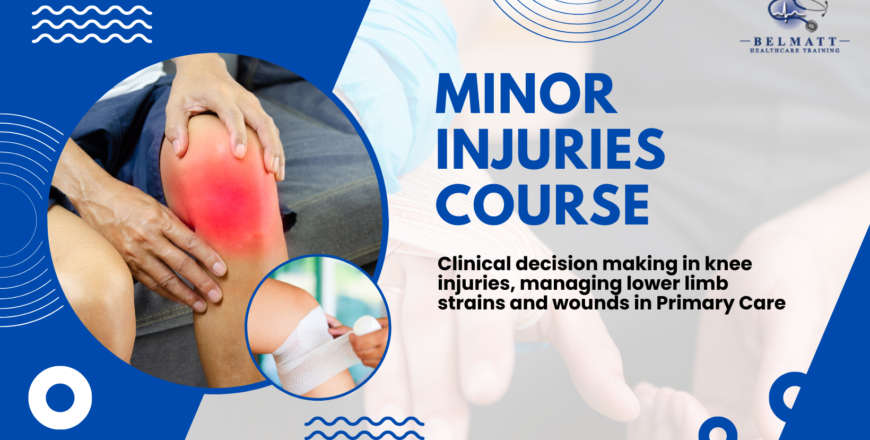
3-Day Minor Injuries Training for Advanced Practitioners, Nurses, Paramedics & Urgent Care Clinicians
Classroom Dates: 1–2 October 2026
Venue: CMF, 6 Marshalsea Road, London – conveniently located near Borough Underground Station and London Bridge Station
Live Webinar: 7 October 2026 via Zoom
Time: 10:00–16:00 each day
CPD: 30 Participatory Learning Hours
Format: 2 Practical Classroom Days + Live Interactive Webinar
Build Confidence in Assessing and Managing Minor Injuries
Develop the practical skills and clinical confidence to assess, diagnose and manage common minor injuries in primary care, urgent care, minor injury units and emergency settings. This comprehensive 3-day Minor Injuries Course combines two hands-on classroom training days in London with a live interactive webinar. The classroom sessions have a strong practical focus, giving delegates the opportunity to practise upper and lower limb examination, wound assessment, suturing, taping, splinting and immobilisation techniques under the guidance of experienced clinicians. The live webinar builds on these practical skills and focuses on the assessment and management of head injuries, concussion, cervical spine injuries and burns, including red-flag recognition, referral and safety-netting. Throughout the programme, delegates will work through realistic clinical cases to strengthen clinical reasoning, assessment skills and safe decision-making. Teaching incorporates current UK evidence and guidance, including relevant NICE recommendations and contemporary urgent and emergency care practice.
Who Should Attend?
This Minor Injuries Course in London is suitable for healthcare professionals who assess and manage patients presenting with musculoskeletal injuries, wounds, head injuries and other minor trauma, including:
- Advanced Clinical Practitioners (ACPs)
- Advanced Nurse Practitioners (ANPs)
- Emergency Nurse Practitioners (ENPs)
- General Practice and Practice Nurses
- Urgent Care Clinicians
- Paramedics
- Physician Associates
- Physiotherapists
- First Contact Practitioners (FCPs)
- Independent Prescribers
- Minor Injury Unit clinicians
- Walk-in Centre clinicians
- Healthcare professionals developing skills in minor injury assessment and management
Whether you are developing your minor injuries assessment skills or are an experienced clinician looking for a practical update, this course provides an opportunity to refresh examination techniques, practise essential clinical skills and strengthen your approach to managing minor injuries safely and confidently.
Classroom Day One : Upper Limb Assessment, Suturing & Wound Care Upper Limb Assessment Learn a structured approach to examining patients presenting with upper limb injuries. Topics include:
- Shoulder assessment
- Elbow examination
- Wrist assessment
- Hand and finger examination
- Neurovascular assessment
- Recognition of red flags
- Clinical reasoning
- Referral and escalation
Practical Suturing Workshop Gain hands-on experience in wound closure techniques, including:
- Simple interrupted suturing
- Steri-Strips®
- Tissue adhesive
- Staples
- Local anaesthetic considerations
- Aseptic technique
- Infection prevention
- Consent and documentation
Wound Assessment & Management Develop confidence in assessing and managing:
- Acute wounds
- Lacerations
- Bite wounds
- Dressing selection
- Wound infection
- Wound complications
- Tetanus guidance
- Antimicrobial considerations
- Safety-netting advice
Classroom Day Two :Lecturer: Rob Fernandes – Emergency & Urgent Care Practitioner
Rob Fernandes is an experienced Emergency and Urgent Care Practitioner with a specialist interest in minor injuries and musculoskeletal assessment. He holds an MSc in Sports Injuries and brings extensive frontline experience in assessing and managing patients presenting with acute injuries.His teaching has a strong practical focus, helping clinicians develop confidence in musculoskeletal examination, clinical reasoning and the safe management of common minor injuries
Lower Limb Assessment, Taping & Splinting and Lower Limb Assessment
Learn how to assess common lower limb injuries using a systematic approach. Topics include:
- Knee examination
- Ligament injuries
- Meniscal assessment
- Ankle injuries
- Foot examination
- Ottawa Ankle Rules
- Weight-bearing assessment
- Mobility assessment
- Red flag recognition
Shoulder Practical Workshop Further develop your shoulder assessment skills by exploring:
- Functional assessment
- Rotator cuff injuries
- Shoulder instability
- Dislocation recognition
- Referral pathways
Practical Taping & Splinting Workshop Build confidence in applying musculoskeletal support techniques, including:
- Ankle taping
- Knee taping
- Sling application
- Soft splint application
- Immobilisation techniques
- Patient education
- Safe discharge planning
Listen to our latest podcast on ankle injuries here:
Day 3 – Live Webinar: X-Ray Interpretation, Head Injuries & Burns
09h00 – 12h00 X-Ray Interpretation – Dr Asad Khan, Orthopaedics
A practical, case-based session developing confidence in interpreting upper and lower limb X-rays in minor injury and urgent care settings.
- A structured approach to X-ray interpretation
- Recognising normal anatomy and common abnormalities
- Upper limb X-rays: shoulder, elbow, wrist and hand
- Lower limb X-rays: knee, ankle and foot
- Recognising common fractures and dislocations
- Identifying subtle or easily missed injuries
- Correlating X-ray findings with clinical examination
- When further imaging, orthopaedic review or referral is required
- Interactive X-ray cases and interpretation practice
Head Injury Assessment – Dr Parmy Deol, A&E Consultant
- Minor head injury and concussion
- Neurological assessment
- Recognition of red flags and deterioration
- Imaging and referral considerations
- Safety-netting and follow-up
Burns Assessment & Management – Nicola Lee, Burns Specialist Nurse
-
- Classification, depth and surface area of burns
- Initial assessment and management
- Chemical and electrical burns
- Recognising burns requiring specialist referral
- Patient advice, safety-netting and follow-up
Why Choose This Course?
- Practical, hands-on workshops
- Live demonstrations with supervised practice
- Expert-led teaching from experienced urgent care clinicians
- Evidence-based learning aligned to current UK guidance
- Interactive case discussions
- Small-group practical sessions
- Skills that can be applied immediately in clinical practice
- 30 hours of CPD
Whether you work in general practice, urgent treatment centres, emergency departments, walk-in centres or minor injury units, this course will enhance your assessment skills, strengthen your clinical decision-making and improve your confidence in managing patients with minor injuries.
Lecturers: Dr Parmy Deol, Dr Asad Khan, Nicola Lee, Rob Fernandes and Jeshni Amblum-Almer
-
1
 Minor Injuries Pre-Course Workbook
The Upper and Lower Limb Assessment Precourse Workbook is a comprehensive, clinically focused learning resource designed to prepare healthcare professionals for practical musculoskeletal (MSK) assessment training. Developed by Belmatt Healthcare Training, it provides a structured foundation in anatomy, physiology, and clinical examination of both the upper and lower limbs.
-
2
MSK Workbook
The Upper and Lower Limb Assessment Pre-course Workbook has been developed to support your learning before, during, and after the taught MSK sessions. It is a core learning resource and should be used actively rather than read passively. The workbook structure includes anatomy revision, clinical assessment frameworks, functional tests, and applied case studies
-
3
History Taking Minor Injuries handouts
-
4
 Recording: History Taking and Consultation Skills
This recording explore the importance of good history taking. Good history-taking is fundamental to effective clinical practice in primary care and general practice. It forms the cornerstone of diagnosis and management, enabling clinicians to:
-
5
Statement writing
-
7
Head Injury and C-Spine Multimedia recording
-
8
Silver Trauma
The aim of this session is to enhance clinicians’ confidence and clinical decision-making in the early recognition, assessment, and management of silver trauma in older and frail adults. The session emphasises the importance of frailty-informed assessment, early escalation, appropriate imaging, and safe disposition to reduce missed injuries, morbidity, and mortality in this high-risk population
This course is fully booked. Our next course is 24 November and 2,9 December 2026. Email [email protected].