
Telephone Triage 17 November 2026

- Description
- Curriculum
Date: 17 November 2026
Delivery: Live Interactive Webinar
CPD: 7 Hours Participatory CPD
Suitable for: Nurses, ANPs, ACPs, Paramedics, Pharmacists and other healthcare professionals
Certificate: Certificate of Completion
Telephone Triage & Remote Consultation Skills for Healthcare Professionals
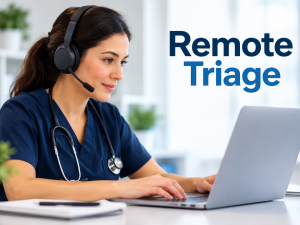
The Telephone Triage & Consultation Skills Course is a practical, interactive training day designed for healthcare professionals who assess and manage patients remotely.
Telephone consultations are now an established part of general practice, primary care, urgent care and community healthcare. However, assessing a patient without being able to see them presents additional challenges. Clinicians must gather relevant information efficiently, recognise potential red flags, assess clinical risk and decide whether the patient can be safely managed remotely or requires face-to-face or urgent assessment.
This 7-hour participatory CPD course uses clinical scenarios, structured consultation approaches and interactive discussion to develop confidence in telephone triage, remote assessment, clinical decision-making and safety-netting.
Who Is This Course For?
This course is suitable for healthcare professionals who undertake telephone or remote consultations, including:
- Advanced Nurse Practitioners (ANPs) and Advanced Clinical Practitioners (ACPs)
- Nurse Practitioners and Practice Nurses
- Paramedics
- Pharmacists
- Primary care and general practice clinicians
- Urgent care and same-day care clinicians
- Community healthcare professionals
- Clinicians moving into roles involving telephone triage or remote consultation
What Will You Learn?
By the end of the course, participants will be better able to:
- structure a safe and effective telephone consultation;
- gather clinically relevant information without visual examination;
- use effective questioning and communication techniques;
- identify important clinical red flags;
- assess clinical risk and recognise the deteriorating patient;
- develop appropriate differential diagnoses from a remote assessment;
- decide when remote management is appropriate;
- recognise when face-to-face assessment or urgent escalation is required;
- manage uncertainty and challenging telephone consultations;
- provide clear safety-netting and follow-up advice; and
- document telephone consultations appropriately.
Course Content
Structuring the Telephone Consultation
Explore a systematic approach to telephone and remote consultations, from establishing the reason for contact to developing an appropriate management plan.
The session considers information gathering, focused history taking, clinical reasoning, decision-making and consultation closure.
Communication & Questioning Skills
Without the benefit of visual cues and physical examination, effective communication becomes particularly important.
Participants will explore techniques for:
- open and closed questioning;
- clarifying vague or ambiguous symptoms;
- active listening;
- identifying the patient’s main concerns;
- checking understanding;
- communicating risk; and
- providing clear management advice.
Remote Clinical Assessment
Develop a structured approach to assessing symptoms remotely. Clinical cases will explore how information from the history, patient observations where available and functional assessment can contribute to clinical decision-making. A key principle throughout the course is: Can this patient be safely managed remotely, or do they need to be seen?
Recognising Red Flags
Telephone triage requires clinicians to identify potentially serious illness without relying on a conventional physical examination.Case-based teaching will explore the recognition of red flags, clinical deterioration and presentations requiring urgent escalation.
Clinical Reasoning & Managing Uncertainty
Not every telephone consultation results in a definitive diagnosis. Participants will explore how to formulate differential diagnoses, assess probability and risk, and make safe decisions when the clinical picture remains uncertain.
Three questions underpin the clinical reasoning approach:
- What is the most likely diagnosis?
- What serious condition could I be missing?
- What is the safest next step for this patient?
Safety-Netting
Effective safety-netting is an essential component of remote consultation.
Participants will consider how to provide patients with clear information about:
- expected progression of symptoms;
- warning signs to monitor;
- when to seek further medical advice;
- when urgent or emergency assessment is required; and
- appropriate follow-up arrangements.
Documentation & Medico-Legal Considerations
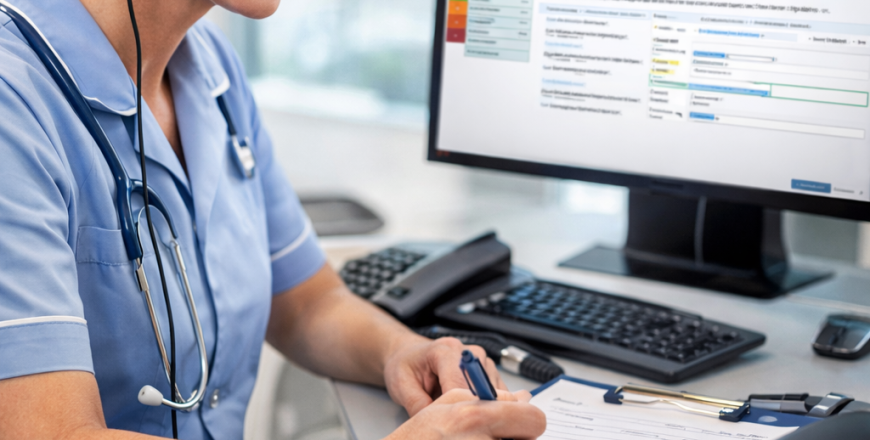
Explore the importance of maintaining clear and contemporaneous documentation of remote consultations, including the history obtained, clinical reasoning, advice provided, escalation decisions and safety-netting.
Interactive Case-Based Learning
This is not simply a lecture-based webinar. The course uses realistic clinical scenarios and interactive discussion to help participants apply telephone triage principles to everyday practice.
Teaching includes case-based discussions, telephone consultation scenarios, differential diagnosis exercises, red-flag recognition, clinical decision-making exercises, safety-netting examples and opportunities for questions and discussion.
Why Attend This Telephone Triage Course?
Telephone and remote consultation requires a different skill set from traditional face-to-face assessment. This course helps clinicians develop a structured approach to remote assessment, with particular emphasis on patient safety, communication, clinical reasoning and recognising when a telephone consultation is no longer sufficient.
-
2
 Telephone Triage in General Practice
 -
3
Telephone Triage Consultation Links
NHS England site provides some excellent tips and tools for telephone triage. Please click link below.
-
4
Digital Online Tools
Overview of Digital Online Tools for Clinicians in General Practice, Primary Care, and Community Settings
This course provides an overview of digital tools designed to support clinicians working in general practice, primary care, or community settings who are undertaking telephone triage. It focuses on equipping healthcare professionals with the knowledge and skills to incorporate digital resources into their triage workflows, enhancing clinical decision-making, documentation, and patient communication
-
5
References and Resources for Telephone Triage
Below are some references for further reading and example audit tool as 1% of all your triage calls are auditted every month.




Social Network