
Paediatric Minor Injuries Online
- Description
- Curriculum
- FAQ
- Notice

Course Overview
This eLearning course is designed to equip healthcare professionals such as nurses, pharmacists, paramedics, doctors, and allied healthcare professionals with the knowledge, skills, and confidence to accurately assess, diagnose, and manage common paediatric minor injuries. The focus will be on a patient-centred approach and evidence-based practice within general practice, urgent care, community care, A&E, and walk-in centers.
Aims
To provide an understanding of the unique characteristics of paediatric patients and how they influence the assessment and management of minor injuries and cultivate effective communication skills to interact with children, their families, and multidisciplinary team members.
Objectives
By the end of this course, participants should be able to:
- Recognise the typical types of minor injuries in children and conduct a thorough assessment.
- Apply evidence-based interventions, including pharmacological and non-pharmacological treatment options.
- Use compassionate and effective communication skills with children and their caregivers.
Course Content
Assessment Techniques:
- History taking in children (eliciting symptoms from the child and guardian).
- Physical examination techniques specific to paediatric patients.
Some specific injuries include:
- Upper Limb Injuries: Finger and hand injuries: including fingertip injuries and nail bed injuries. Shoulder & Clavicle, elbow and wrist
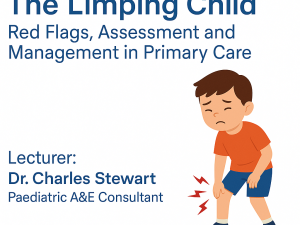
- Lower Limb Injuries: Ankle sprains. Knee Injuries. Minor foot injuries. Limping child
- Minor Head Injuries: Concussion, and return to play. Scalp lacerations.
- Minor Burns and Scalds: Assessment, classification, and management.
- Foreign Body: Nose and ear foreign bodies. Splinters.
- Bites and Stings: Insect bites, animal bites.
- Eye Injuries: Minor corneal abrasions, foreign bodies.
Case Studies and Scenarios:
- Interactive discussions based on real-life cases.
-
1
 Paediatric Minor Injury- Introduction
 -
2
Paediatric Legal and Ethical and Developmental issues
Session Overview:
- Introduction: Importance of understanding developmental milestones in paediatric healthcare.
- Developmental Domains: Overview of physical, cognitive, language, and social/emotional milestones.
- Age-Specific Milestones: Review of key milestones in infancy, toddlerhood, preschool, and school-age children
-
3
Paediatric Concussion Presentation
Head injuries and concussion are common presentations in paediatric emergency and primary care settings. This interactive session, led by Dr Charles Stewart, explores the clinical approach to assessing paediatric head injuries, differentiating between minor and serious cases, and recognising when urgent imaging or referral is required. The session reviews current NICE head injury guidance, concussion management principles, and essential safety-netting advice for parents and carers.
Participants will gain practical insights into clinical decision-making, documentation, and post-concussion care to support safer practice and improved outcomes for children. -
4
 Paeds Concussion Quiz
-
5
Pre Learning MCQ ApophysitisThis session prepares you for the session on apophysitis in children.
-
6
Recording : Apophysitis in Children
A one-hour CPD session covering the pathophysiology, clinical presentation, and evidence-based management of apophysitis in children. Learn to assess and treat conditions like Osgood-Schlatter and Sever’s disease.
-
7
Post Learning MCQ Apophysitis

-
12
Wound Care Recording eLearning
This workshop aims to:
- Enhance healthcare professionals’ knowledge of wound healing and assessment.
- Develop practical skills in selecting appropriate wound dressings.
- Improve understanding of evidence-based guidelines and best practices in wound management.
- Equip clinicians with strategies to prevent wound complications and promote optimal healing.
-
13
Wound Care MCQThis is a short quiz to test your knowledge around management of wounds.
-
17
Paediatric Antimicrobial Prescribing in primary care
This one-hour session provides healthcare professionals with an update on antimicrobial prescribing in children. It focuses on common infections in primary care, appropriate antibiotic choices, and strategies to combat antimicrobial resistance. Participants will learn to apply prescribing guidelines confidently, recognising when antibiotics are indicated and how to educate parents on appropriate use.
-
18
Improving safety in paediatric prescribing
·tMinor Illness
·tMinor Injuries
·tBlood Results Interpretation
·tPaediatric Minor Injuries
·tPaediatric Minor Illness
·tMental Health Awareness
·tAutism Training
·tBasic Life Support and Anaphylaxis training
·tMandatory training
·tSafeguarding Children (Levels 1, 2 & 3)
·tLearning Disability Awareness
·tDementia Care
This is an eLearning course with 3 months access.





Social Network