Blog
Go where there is no path and leave a trail
- 4 August 2026
- Posted by: JeshniAlmer
- Category: Uncategorised
“The secret of change is to focus all of your energy not on fighting the old, but on building the new.” A quote often attributed to Socrates. A few months ago I was making a burrata salad.with creamy burrata, basil, olive oil and tomatoes. The large, perfectly shaped beef tomatoes looked delicious but tasted… like nothing. They had travelled hundreds of miles, survived weeks in storage and somehow lost the very thing that made them tasty. For a moment I did what most of us do. I bemoaned the steady decline of society stemming from it’s poor production of tasty beef tomatoes. I decided to change the narrative and instead of wondering why nobody produced tomatoes with real flavour anymore, I asked myself a different question. What if I grew my own?
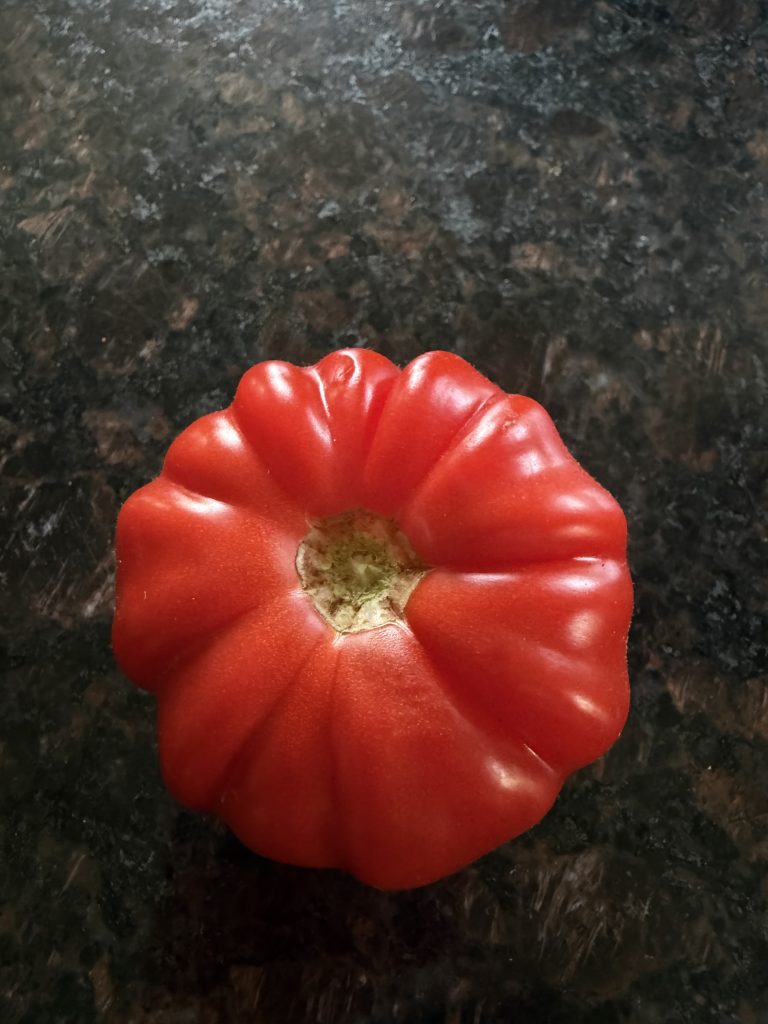
“When I stopped complaining about the tomatoes, I started growing them. The same principle applies to healthcare, our careers and our lives. If what you need doesn’t exist, perhaps it’s because you’re the one meant to create it.”So I grew my own basil and tomatoes, that’s my tomato in the blog picture. The burrata now comes from a wonderful local farmer whose passion for quality is reflected in every bite. As I looked at my growing collection of home-produced ingredients, I smiled to myself. “Now I just need to learn how to make my own balsamic vinegar.”
Life presents us with this choice more often than we realise. We can complain about what isn’t working, or we can choose to create something better. Complaining may provide temporary relief, but it rarely changes anything. Creation, however, changes everything. It requires curiosity, courage and a willingness to take responsibility for the future we want to build. There is a quote by Aristotle that has stayed with me throughout my career: “We are what we repeatedly do. Excellence, then, is not an act, but a habit.” On a side note, I would recommend reading A History of Philosophy by Coplestone (2003) and originally published in 1946. This is the source of some of my clever quotes.
Growing tomatoes is no easy task as it requires watering them day after day, protecting them from pests, supporting them as they climb and accepting that not every plant will flourish. Growth is found in the small, consistent actions that are repeated over time. Healthcare has taught me the same lesson. Throughout my career, I have heard countless conversations that begin with the same frustrations: “The system doesn’t support us.” “There aren’t enough opportunities.” “Nobody gives us a chance.” Healthcare is complex, resources are stretched, and change can be painfully slow. But remaining in that place of frustration changes nothing. One of the greatest lessons I have learned is that innovation rarely begins with abundance. More often, it begins with limitation. Some of the most creative people I have met, have not had access to the latest technology, the biggest budgets or the perfect conditions. They have simply looked at what was available and asked, “What can I create with this?”
Growing up in South Africa, I remember stopping at traffic lights and seeing people transforming discarded materials into something valuable. What others saw as rubbish, they saw as opportunity. Old tyres became furniture, scrap metal became art, recycled wood became handcrafted products, and unwanted materials found a new purpose through imagination and skill. It wasn’t simply about earning a living; it was about seeing possibility where others saw waste. There was a quiet creativity in refusing to accept that something had reached the end of its usefulness.
That way of thinking has stayed with me. Innovation is not always about inventing something completely new. Sometimes it is about looking at something old through a different lens. It is about asking better questions rather than waiting for better circumstances. It is about seeing potential where others see problems.
Healthcare is no different. We often spend enormous amounts of energy talking about what is broken; the pressures on the NHS, workforce shortages, increasing demand and limited resources and this is something you hear in pretty much any job out there. These challenges are real, but history shows that many of the greatest advances in healthcare did not happen because people had unlimited resources. They happened because someone looked at an existing problem differently, redesigned a process, combined ideas in a new way or created a pathway that had never existed before.
George Bernard Shaw once wrote, “Progress is impossible without change, and those who cannot change their minds cannot change anything.” Those words remind us that progress requires us to move beyond simply identifying problems. It asks us to become part of the solution.
Of course, creating something new is never easy. Growing tomatoes from seed is far slower than buying them from the supermarket. Meaningful things rarely happen quickly. Some seeds never germinate. Some ideas fail. Some projects become something entirely different from what we imagined. Yet failure has never been the opposite of success. More often, it is part of the journey towards it.
Samuel Beckett expressed this beautifully when he wrote, “Ever tried. Ever failed. No matter. Try again. Fail again. Fail better.” Those words resonate deeply with me because my own career has never followed a straight line. From the depths of Africa I strayed across the ocean to roles in emergency care, management , back to primary care and education.Each chapter required me to learn something entirely new. Each transition demanded the courage to begin again. Perhaps the greatest lesson I have learned is that our professional identity is not something we simply discover. It is something we create.
Many healthcare professionals find themselves at that crossroads today. They know they are capable of more. They are curious about advanced practice, interested in leadership, passionate about education or considering a portfolio career that combines clinical work with teaching, research or innovation. They are searching for a pathway, yet perhaps the real answer is that there is no single pathway. There shouldn’t be. No two clinicians are the same, so why should their careers be?
This belief has inspired something that I am incredibly excited to be part of. At Belmatt Healthcare Training, in collaboration with GP Pathfinder, we are developing a three-month Primary Care and Advanced Practice Mentorship Programme for healthcare professionals who want to take the next step in their careers. This is far more than another course. It is a journey that combines expert-led teaching with supervised clinical practice, mentorship, reflection and practical application. Experienced clinicians will not simply teach; they will guide, support and challenge participants to become the practitioners they aspire to be.
Our aim is not to encourage everyone to follow the same route. Quite the opposite. We want to help practitioners define their own path. Whether your ambition is advanced clinical practice, urgent care, primary care, leadership, education, research, quality improvement or building a portfolio career that reflects multiple passions, we believe your career should reflect who you are—not who others expect you to become. Together, we will help you build the knowledge, confidence and clinical capability to create a career that is uniquely your own.
After all, if I can decide to grow my own tomatoes because I wanted something better, why shouldn’t we approach our careers with the same mindset? Perhaps that is the greatest lesson hidden inside a simple burrata salad. Life rarely improves because we complain. It improves because we create. The opportunities we long for often begin with the courage to plant a single seed.
Ralph Waldo Emerson captured this perfectly when he wrote, “Do not go where the path may lead; go instead where there is no path and leave a trail.”
So perhaps this is the year to stop waiting. Stop accepting the ordinary. Stop believing that someone else will define your future. Plant your own seed. Create your own pathway. Define your own identity. Grow your own career.
And who knows? One day, while enjoying a burrata salad made, you may realise that the most important thing you ever cultivated was never the tomato at all.
It was yourself.
Epilogue
At Belmatt Healthcare Training, we believe that no two careers should look the same. Advanced practice is not a single destination but a collection of pathways. Some practitioners aspire to become Advanced Clinical Practitioners, while others want to specialise in primary care, urgent care, education, leadership, quality improvement, or digital healthcare. Increasingly, clinicians are combining several roles to create fulfilling portfolio careers.
That is why we have developed a new three-month Primary Care and Advanced Practice Mentorship Programme in collaboration with GP Pathfinder. This is more than a training course. It is a supported journey designed to help practitioners build confidence, develop practical clinical skills, and gain a deeper understanding of the realities of modern primary care.
The programme combines:
- Expert-led clinical teaching from experienced practitioners working at the forefront of primary care.
- Supervised clinical exposure within primary care settings.
- Practical workshops that bridge theory with real-world practice.
- Mentorship from clinicians who have successfully developed advanced and portfolio careers.
- Personal career planning to help you identify your strengths, interests and long-term aspirations.
Most importantly, we recognise that everyone starts from a different place. Rather than expecting you to fit into a predetermined model, we help you define your own pathway. Whether your ambition is to work as an advanced practitioner, specialise in a particular clinical area, develop leadership skills, or create your own unique portfolio career, we will help you map the route that works for you.