
Blog
Listeria monocytogenes: Managing an Emerging Foodborne Threat
We have seen in recent media reports of an outbreak of Listeria, a bacterium found in packages and precooked meals. Listeria is a type of bacteria that is particularly tough and adaptable. It is called a facultative intracellular pathogen, which means it can live both inside and outside of human cells. This ability makes it especially dangerous in vulnerable people, such as the elderly, pregnant women, and those with weak immune systems.
Unlike most germs that cause food poisoning, Listeria can survive and even grow in extreme conditions, like inside your fridge (as cold as 0–4°C), in salty foods, or in acidic environments like some pickled items. One of the ways it survives is by forming biofilms. A biofilm is a slimy layer that bacteria create to stick to surfaces (such as metal, plastic, or food machinery) and protect themselves. This makes them harder to remove, even with cleaning or disinfectants, which is why they can persist in food factories and contaminate food over time.
Once Listeria is eaten and enters the body, it can invade the lining of the gut (epithelial cells). After getting inside a human cell, the body tries to trap it in a tiny bubble called a phagosome, sort of like a prison for bacteria. But Listeria is clever. It produces enzymes that break out of this bubble, “escaping from the phagosome”, and then it moves freely inside the cell. From there, it can spread to other cells or travel in the bloodstream to serious areas like the brain (causing meningitis) or the placenta (causing miscarriage or stillbirth). This ability to move inside cells and hide from the immune system is part of what makes Listeria such a dangerous germ.
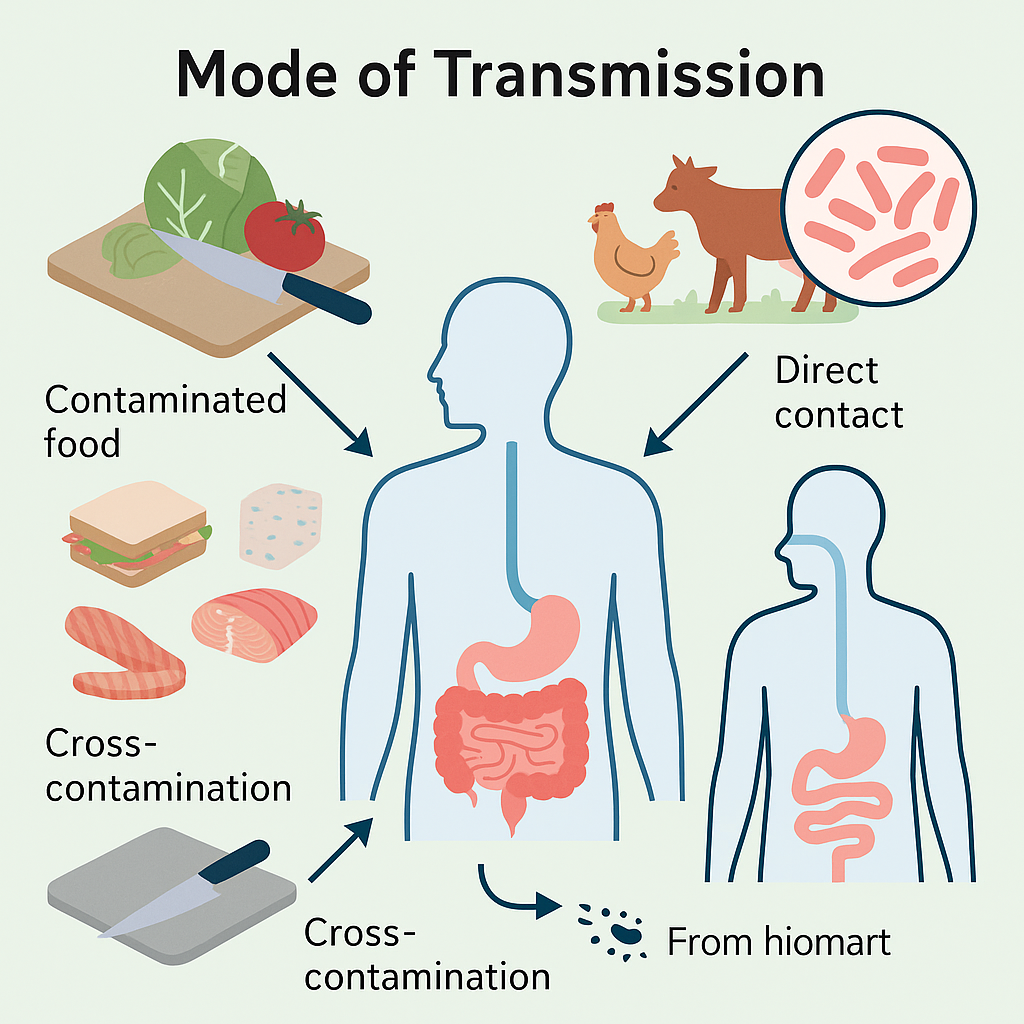
This whole process of surviving extreme environments, hiding in biofilms, and moving inside our cells, explains why Listeria can cause such severe illness even though it’s relatively rare.
Transmission and Sources of Listeriosis: Understanding the Risks Listeriosis is most commonly transmitted through ingestion of food contaminated with Listeria monocytogenes. This pathogen is particularly dangerous due to its ability to survive and multiply in cold, salty, and low-pH environments, making many everyday refrigerated foods potential vehicles for infection (Koopmans et al., 2023). Several specific food types are regularly associated with outbreaks or sporadic cases due to how they are produced, stored, or consumed:
Ready-to-eat deli meats and pâtés These are frequently implicated in outbreaks because they are often consumed without further cooking, which would otherwise kill Listeria. The bacteria can survive post-processing contamination during slicing or packaging. A key study by Cartwright et al. (2013) found that deli meats were responsible for 83% of listeriosis deaths in the U.S. (Cartwright et al., 2013).
Unpasteurised dairy products (e.g., soft cheeses) Soft cheeses made from raw milk, such as brie, camembert, or blue-veined cheeses, are high-risk because Listeria can survive and grow in the moist, nutrient-rich environment they provide. Pasteurisation kills the bacteria, but products made from raw milk do not offer this protection (CDC, 2024; EFSA, 2023). One review showed a significantly increased risk of pregnancy-associated listeriosis linked to soft cheese consumption (Jackson et al., 2011).
Cold-smoked fish Smoked salmon and similar products do not undergo cooking during the smoking process, and they are typically vacuum-packed and refrigerated—conditions ideal for Listeria survival and slow growth. This was highlighted in the 2022 UK outbreak linked to cold-smoked trout and salmon products (EFSA, 2022).
Pre-packaged sandwiches and salads These are ready-to-eat items often stored in chilled conditions. If contaminated during production or assembly (e.g., via infected ingredients or unsanitised equipment), they can carry Listeria. Because these products are not usually reheated before consumption, the bacteria remain viable. A 2019 UK hospital outbreak linked to pre-packaged sandwiches resulted in several deaths, underlining this risk (PHE, 2019).
Raw or undercooked vegetables Soil and water contaminated with Listeria can carry the bacteria onto produce. If vegetables are not properly washed or cooked, especially in ready-to-eat salads or sprouts, they can serve as transmission vehicles. Cross-contamination from knives or cutting boards is a common issue in domestic and institutional kitchens (FAO/WHO, 2004).
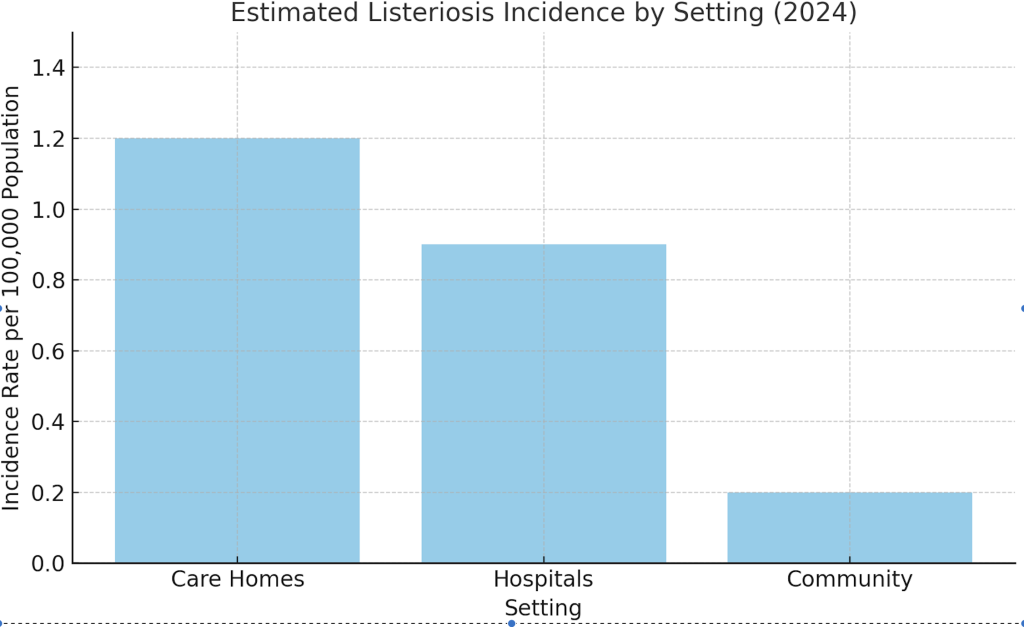
Cross-Contamination in Kitchens and Healthcare Environments In addition to direct contamination of food, cross-contamination is a significant route of transmission. Listeria can persist on surfaces such as cutting boards, slicers, or refrigeration units, forming biofilms that are resistant to cleaning and disinfection. This is especially dangerous in hospitals and care homes, where vulnerable patients may consume contaminated food prepared in bulk under less stringent conditions. The 2024 NHS hospital outbreak linked to mousse desserts is an example where vulnerable individuals were exposed through seemingly safe foods (UKHSA, 2024).
Clinical manifestations
Listeriosis can cause a wide range of symptoms, from mild stomach upset to serious illness. In healthy people, eating a high amount of Listeria monocytogenes may just cause diarrhoea, fever, and tiredness, similar to a viral infection. However, in people with weaker immune systems, such as the elderly, pregnant women, newborns, and immunocompromised individuals, the infection can become much more severe (Koopmans et al., 2023).About 52% of severe cases involve bacteraemia, where the bacteria spread into the bloodstream and cause general symptoms like fever and fatigue, often without an obvious source. Around 31% of cases involve the central nervous system, leading to neurolisteriosis, such as meningitis or brain inflammation. This is more common in older adults and may present with confusion, headache, neck stiffness, or seizures (Koopmans et al., 2023).Pregnancy-related listeriosis accounts for around 14% of cases and can result in miscarriage, stillbirth, premature labour, or severe infection in the newborn. Babies may become ill within the first week of life (early-onset disease), showing signs such as breathing difficulty or sepsis, or later as meningitis (late-onset disease) (Koopmans et al., 2023) Less common complications include heart infections (endocarditis), bone or joint infections (osteomyelitis, septic arthritis), or eye and skin infections, which are more likely in people who handle infected animals (Maury et al., 2016). Listeria can invade human cells, escape the body’s immune defences, and travel to protected parts of the body like the brain or placenta. Certain genetic types of Listeria, such as CC4 or CC6, are more aggressive and more likely to cause brain infections or pregnancy-related illness, making early diagnosis and treatment in at-risk groups especially important (Maury et al., 2016).
Case Study: Hospital Outbreak in the UK
In 2019, a Listeria outbreak in the UK linked to contaminated pre-packaged sandwiches and salads resulted in seven hospital patients dying. Investigations traced the outbreak to a food supplier whose products were delivered to over 40 hospitals across the country. The bacterium was found in meat products kept under refrigeration. Most victims were immunocompromised or elderly patients who consumed the food while hospitalised. This event underscored the risks of Listeria contamination in healthcare settings and the importance of stringent infection prevention and food safety standards (Public Health England, 2019)
Listeriosis in the UK: 2024 Surveillance Summary
In 2024, there were 179 confirmed cases of listeriosis reported in England and Wales, which is almost the same as the 177 cases recorded in 2023. The rate of infection stayed steady at about 0.29 cases per 100,000 people. Of the 142 cases that were not pregnancy-related, 28 people sadly died, giving the condition a high case-fatality rate of nearly 20%. The highest number of cases was seen in people aged 80 and over, with more men affected than women among those aged 60 and above. About 21% of cases were linked to pregnancy, and nearly 44% of these led to miscarriage or stillbirth. Regional differences were noted, with London having the highest number of cases (0.39 per 100,000) and the East of England the lowest (0.23 per 100,000). During the year, seven outbreaks were investigated, all linked to high-risk foods such as smoked fish, mousse desserts, garlic sausage, and pre-packed sandwiches. These figures highlight the importance of food safety, especially for vulnerable groups like older adults and pregnant women. Recent UK Outbreak: NHS Hospital Desserts (2024–2025)
Between May and December 2024, five cases of listeriosis occurred in NHS hospitals, affecting elderly patients (aged 68–89) with underlying conditions. Tragically, three patients died, including at least one confirmed as listeriosis-relatedThe outbreak was linked to chilled desserts (mousses and ice creams). Although bacterial levels were below legal limits, the products were withdrawn as a precaution due to patient vulnerability Healthcare authorities across England, Yorkshire & Humber, North West, West Midlands, and Wales issued urgent recalls and directives to halt service of the affected products in hospitals and care homes
Summary Table
| Metric | Value (England & Wales, 2024) |
| Total confirmed cases | 179 |
| Incidence rate | 0.29 per 100,000 population |
| Deaths among non-pregnancy cases | 28 (≈20% fatality rate) |
| Pregnancy-associated cases (%) | ~21% |
| Miscarriage/stillbirth rate (pregnancy cases) | 43.7% |
| Number of outbreaks | 7 |
| NHS dessert-linked hospital deaths | 3 reported |
These figures confirm that while listeriosis remains rare in the UK, it carries a high mortality rate, particularly in older adults and vulnerable groups. Hospital-related outbreaks—even from seemingly low-risk desserts—underscore the heightened sensitivity of certain patient populations.
For primary care clinicians, understanding the risks associated with Listeria monocytogenes is essential for early identification and effective management of listeriosis in the community. Although the infection is relatively rare, it can cause severe complications—particularly in high-risk groups such as the elderly, pregnant women, neonates, and immunocompromised individuals (Koopmans et al., 2023). Clinicians should maintain a high index of suspicion when patients present with symptoms such as flu-like illness during pregnancy, unexplained fever or sepsis in immunocompromised individuals, or new neurological symptoms in older adults. These signs can mimic more common viral or bacterial infections, which makes early recognition challenging but crucial. Detailed dietary and exposure histories are equally important; patients should be asked about recent consumption of high-risk foods such as cold-smoked fish, unpasteurised dairy, pre-packed sandwiches, or hospital-prepared meals—known vehicles for Listeriatransmission (CDC, 2024; EFSA, 2023; PHE, 2019).
If listeriosis is suspected, prompt action is vital. Clinicians should arrange blood cultures and, where necessary, cerebrospinal fluid sampling, and urgently refer symptomatic patients—particularly those who are pregnant, elderly, or immunocompromised—to secondary care for definitive treatment (UKHSA, 2024). Listeriosis is a notifiable disease in the UK, requiring notification to the local Health Protection Team for appropriate public health follow-up. Primary care also plays a critical role in prevention. Clinicians should routinely counsel vulnerable patients about safe food practices, advising them to avoid high-risk products and ensure good food hygiene. Educational efforts should focus on pregnant women, people over 60, and those receiving chemotherapy, immunosuppressants, or transplant care. Safety netting is key; clinicians should document red flags and ensure follow-up, especially if results confirm infection or if symptoms progress. As Koopmans et al. (2023) and Maury et al. (2016) highlight, certain hypervirulent strains of Listeria can rapidly progress to CNS or foetal infection, emphasising the importance of early recognition and prompt intervention in primary care. Ultimately, vigilance, patient education, and robust referral pathways can significantly reduce the risk of serious outcomes in those most vulnerable to this pathogen.
Tests for Listeriosis: What and Why
When listeriosis is suspected—especially in pregnant women, neonates, older adults, or immunocompromised individuals—timely diagnostic testing is critical to confirm infection, guide treatment, and assess complications.
When listeriosis is suspected, particularly in high-risk individuals such as pregnant women, neonates, older adults, or immunocompromised patients—timely diagnostic testing is essential to confirm the infection, guide appropriate treatment, and assess potential complications. Blood cultures are the gold standard for diagnosis, as Listeria monocytogenes causes bacteraemia in over 50% of invasive cases. They help not only confirm the presence of the bacterium in the bloodstream but also determine the strain and its antibiotic susceptibility (Koopmans et al., 2023). Additional blood tests, including a Full Blood Count (FBC), C-Reactive Protein (CRP), Urea and Electrolytes (U&E), and Liver Function Tests (LFTs), are used to evaluate the severity of the infection and monitor systemic involvement. FBC may reveal a raised white cell count indicative of infection or anaemia associated with chronic illness. Elevated CRP suggests systemic inflammation and is useful in tracking response to treatment. U&E and LFTs provide insights into renal and hepatic function, which is particularly important in septic patients and during intravenous antibiotic therapy. For patients presenting with neurological symptoms such as confusion, headache, neck stiffness, or seizures, Cerebrospinal Fluid (CSF) analysis via lumbar puncture is crucial for diagnosing neurolisteriosis. Typical CSF findings in listeriosis include elevated protein, low glucose, and a predominance of mononuclear cells (pleocytosis), which help differentiate it from other causes of meningitis. Together, these investigations enable early detection, targeted therapy, and better outcomes for patients with this potentially life-threatening infection..
Antibiotic Treatment of Listeriosis: Rationale and UK Guidance The treatment of Listeria monocytogenes infections is guided by the pathogen’s intracellular lifestyle, its susceptibility profile, and evidence from both clinical experience and laboratory studies. The choice of antibiotic must ensure effective intracellular penetration and coverage of CNS involvement, which is common in severe disease. In the UK, antibiotic selection is informed by the British National Formulary (BNF) and UK Health Security Agency (UKHSA) recommendations, as NICE does not currently issue a condition-specific guideline for listeriosis.
| Antibiotic | Indication | Rationale |
|---|---|---|
| Amoxicillin / Ampicillin | First-line for most systemic infections, including meningitis | Excellent intracellular activity and CNS penetration; effective against Listeria |
| Gentamicin | Combined with ampicillin for severe infections | Synergistic effect enhances bactericidal action, especially in CNS and endocarditis |
| Co-trimoxazole | Alternative for penicillin-allergic patients | Good oral bioavailability and CNS penetration; effective intracellular action |
| Meropenem | Reserve for severe, resistant, or intolerant cases | Broad-spectrum activity with strong CNS penetration |
| Fosfomycin | Off-label option for refractory or intracellular infections | Good intracellular activity despite limited in vitro sensitivity |
| Vancomycin | Not routinely used; considered if all other options are unsuitable | Poor intracellular penetration; limited evidence of efficacy in listeriosis |
Prevention and Primary Care Management
Preventing listeriosis requires a multifaceted approach focused on food safety, public health education, and tailored advice for high-risk individuals. One of the most effective strategies is educating vulnerable groups—particularly pregnant women, older adults, and immunocompromised individuals—on avoiding high-risk foods such as unpasteurised dairy products (e.g. soft cheeses), cold-smoked fish, pre-packed salads and sandwiches, and deli meats that are not reheated. These foods are commonly implicated in outbreaks due to Listeria monocytogenes‘ ability to survive refrigeration and form biofilms that resist standard cleaning methods (Koopmans et al., 2023; CDC, 2024). In community and healthcare settings, strict food hygiene practices, including handwashing, correct refrigeration, proper cooking temperatures, and prevention of cross-contamination, are essential. Hospitals and care homes should implement protocols to avoid serving chilled high-risk foods to susceptible patients, as highlighted by recent outbreaks in NHS hospitals linked to chilled desserts (UKHSA, 2024). During antenatal care, healthcare providers should routinely offer dietary counselling to pregnant women to reduce the risk of maternal-foetal transmission. Public health bodies like the UK Health Security Agency (UKHSA) and the Centers for Disease Control and Prevention (CDC) also recommend surveillance, prompt case notification, and outbreak investigation to minimise further exposure and improve food safety regulations. These combined efforts are crucial in reducing the incidence of this potentially fatal but preventable infection.
References
Allen, H.K. and Fedorka-Cray, P.J., 2001. Listeria monocytogenes: a model pathogen for studies of antimicrobial resistance. Journal of Food Protection, 64(1), pp.36–42.
Cartwright, E.J., Jackson, K.A., Johnson, S.D., Graves, L.M., Silk, B.J. and Mahon, B.E., 2013. Listeriosis outbreaks and associated food vehicles, United States, 1998–2008. Emerging Infectious Diseases, 19(1), p.1.
CDC, 2024. Listeria (Listeriosis) – Information for Healthcare Providers. [online] Centers for Disease Control and Prevention. Available at: https://www.cdc.gov/listeria/clinicians.html
EFSA, 2023. Listeria monocytogenes – Food Safety Reports and Risk Assessments. [online] European Food Safety Authority. Available at: https://www.efsa.europa.eu/en/topics/topic/listeria-monocytogenes
Koopmans, M.M., Brouwer, M.C., Vázquez-Boland, J.A. and van de Beek, D., 2023. Human Listeriosis. Clinical Microbiology Reviews, 36(1), p.e00060-19. Available at: https://www.ncbi.nlm.nih.gov/pmc/articles/PMC10035648
Maury, M.M., Tsai, Y.H., Charlier, C., et al., 2016. Uncovering Listeria monocytogenes hypervirulence by harnessing its biodiversity. Nature Communications, 7, p.6782. Available at: https://doi.org/10.1038/ncomms6782
PHE, 2019. Public Health England: Listeria Outbreak Linked to Pre-packed Sandwiches. [online] Available at: https://www.gov.uk/government/news/listeria-investigation
UKHSA, 2024. Listeria monocytogenes: Surveillance Reports for England and Wales. [online] UK Health Security Agency. Available at: https://www.gov.uk/government/publications/listeria-monocytogenes-surveillance-reports
CDC, 2024. Listeria (Listeriosis) – Information for Healthcare Providers. [online] Centers for Disease Control and Prevention. Available at: https://www.cdc.gov/listeria/clinicians.html
EFSA, 2023. Listeria monocytogenes – Food Safety Reports and Risk Assessments. [online] European Food Safety Authority. Available at: https://www.efsa.europa.eu/en/topics/topic/listeria-monocytes
Koopmans, M.M., Brouwer, M.C., Vázquez-Boland, J.A. and van de Beek, D., 2023. Human Listeriosis. Clinical Microbiology Reviews, 36(1), p.e00060-19. Available at: https://www.ncbi.nlm.nih.gov/pmc/articles/PMC10035648
Maury, M.M., Tsai, Y.H., Charlier, C., et al., 2016. Uncovering Listeria monocytogenes hypervirulence by harnessing its biodiversity. Nature Communications, 7, p.6782. Available at: https://doi.org/10.1038/ncomms6782
PHE, 2019. Public Health England: Listeria Outbreak Linked to Pre-packed Sandwiches. [online] Available at: https://www.gov.uk/government/news/listeria-investigation
UKHSA, 2024. Listeria monocytogenes: Surveillance Reports for England and Wales. [online] UK Health Security Agency. Available at: https://www.gov.uk/government/publications/listeria-monocytogenes-surveillance-reports
NICE NG143 – Bacterial meningitis and sepsis in under 16s: Refers to Listeria coverage in neonates and high-risk groups.
NICE CKS – Bacterial meningitis (adults):
UKHSA Listeria Surveillance Reports (2024):
https://www.gov.uk/government/publications/listeria-monocytogenes-surveillance-reports