Compassionate, Inclusive and Trauma-Informed Care

- Description
- Curriculum
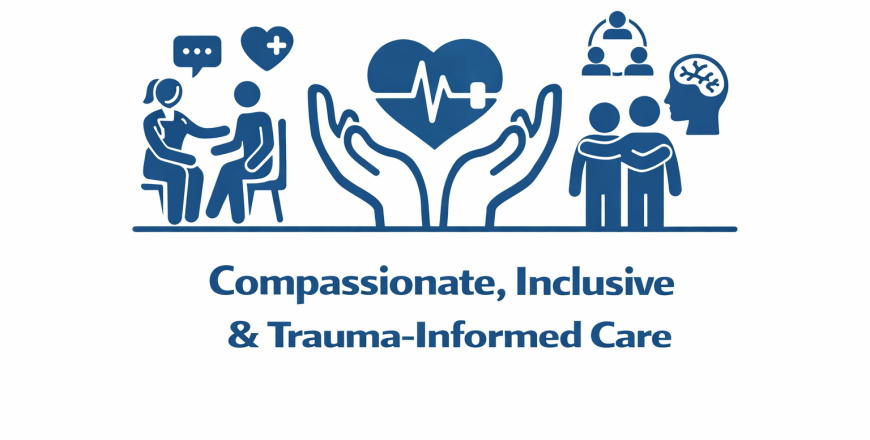
This live 3-hour webinar is for admin and reception staff who want to strengthen compassionate communication and provide more inclusive, trauma-informed support to patients. It explores how everyday interactions can either reduce distress or unintentionally increase it, particularly for people with previous trauma or complex life experiences.
Session overview
For many patients, reception and administrative staff shape the first impression of a service. This session helps participants understand trauma-informed principles, communicate with sensitivity, and create safer, more respectful interactions for all patients, especially those who may feel anxious, mistrustful, or vulnerable.
Outline of the session
- What compassionate and trauma-informed care means in practice
- How trauma can affect communication, trust, and behaviour
- Creating emotionally safe interactions at reception and by phone
- Using inclusive language and reducing stigma
- Understanding triggers, distress, and patient responses
- Maintaining kindness while holding boundaries
- Supporting dignity, choice, and respectful access
- Realistic scenarios and team reflection
Lecturer: Fadzai Magindshaidze

Fadzai Mashingaidze is a highly experienced safeguarding specialist, educator, and advocate for inclusive and culturally competent care, with a strong background in supporting diverse and underserved communities.
She is the Founder of a social impact organisation focused on empowering individuals and communities through education, safeguarding, and culturally responsive practice. Fadzai brings extensive experience working across healthcare, social care, and community sectors, where she has led training programmes on cultural competency, trauma-informed care, safeguarding, and health inequalities.
Fadzai is recognised for her engaging and practical teaching style, helping healthcare teams better understand the impact of culture, lived experience, and trauma on health behaviours and access to care. Her work supports organisations to create more inclusive, equitable, and psychologically safe environments for both patients and staff.
She is particularly passionate about equipping frontline and non-clinical staff with the skills to communicate effectively, reduce barriers to care, and deliver services that are respectful, compassionate, and person-centred.