
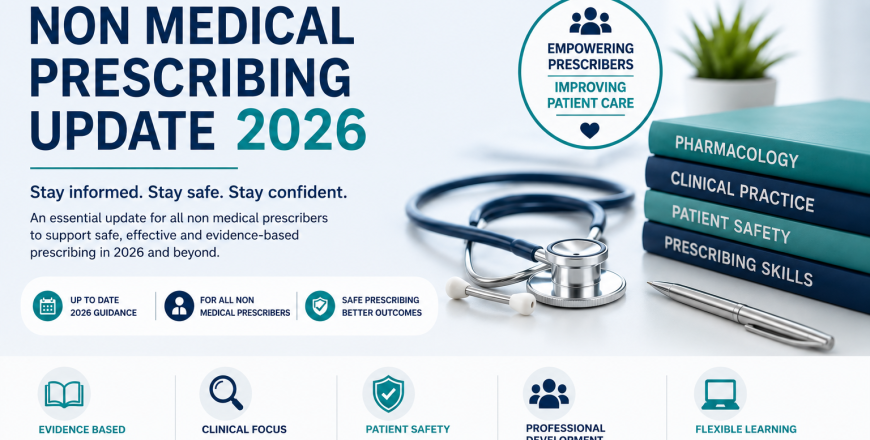
Non Medical Prescribing Update 2026 eLearning

- Description
- Curriculum
This interactive, online course is designed for nurse practitioners, pharmacist prescribers, paramedics, allied health professionals and non-medical prescribers working in primary care, urgent care and community settings.
The course covers the latest prescribing guidance, patient safety updates, professional standards and practical prescribing skills to help reduce errors, improve medicines optimisation and support safer patient care.
Course Details
Course Type: eLearning
CPD Hours: 15 Hours
Certificate: Issued on completion
Access: Online, flexible learning
Suitable For: Non-medical prescribers working in primary care and community settings
Course Overview
This prescribing update helps clinicians meet annual CPD and revalidation requirements while strengthening safe, evidence-based prescribing practice.
The course focuses on real-world prescribing challenges including safer prescribing, deprescribing, transfer of care, antimicrobial stewardship, polypharmacy and current UK prescribing updates.
Participants will explore practical case studies, clinical decision-making tools and professional responsibilities relevant to everyday prescribing practice.
Key Topics Covered
Safer Prescribing: Reducing Prescribing Errors
- Common prescribing errors in non-medical prescribing practice
- High-risk medicines and vulnerable patient groups
- Improving clinical decision-making
- Documentation and safety-netting
- Strategies to reduce medicines-related harm
Deprescribing in Primary Care
- NICE guidance and medicines optimisation principles
- STOPP/START criteria
- NHS polypharmacy guidance
- Frailty, multimorbidity and long-term conditions
- Deprescribing PPIs, antihypertensives and anticholinergics
- Communicating deprescribing decisions with patients
Transfer of Care
- Risks at hospital discharge and care transitions
- Medication reconciliation
- Shared care agreements
- Communication between primary and secondary care
- Reducing prescribing discrepancies
- Maintaining continuity of care
Antimicrobial Prescribing and Stewardship
- Latest UKHSA and NICE antimicrobial prescribing guidance
- TARGET Toolkit principles
- First-line prescribing for UTIs, respiratory tract infections and skin infections
- Delayed and back-up prescribing
- Patient education and safety-netting
- Antimicrobial prescribing audits
UK Prescribing Updates and Regulatory Changes
- Current professional standards
- Prescribing governance
- Accountability for non-medical prescribers
- CPD and revalidation considerations
- Safe prescribing in remote and digital consultations
Also includes the following sessions:
- Prescribing in Asthma, Diabetes and Skin Conditions
- Podcast on Prescribing Emergency Contraception
- Prescribing in STI’s and Vitamin B12 deficiency
Who Should Attend?
This course is ideal for:
- Nurse Practitioners
- Advanced Nurse Practitioners
- Non-Medical Prescribers
- Pharmacist Prescribers
- Paramedic Prescribers
- Community Nurses with prescribing roles
- Allied Health Professionals involved in prescribing
- Primary Care and Urgent Care Clinicians
Why Choose This Course?
- Fully online and flexible
- Supports revalidation and CPD portfolios
- Practical case-based prescribing scenarios
- Focus on safer prescribing and patient safety
- Covers current UK prescribing guidance
- Suitable for primary care, urgent care and community practice
- Certificate issued on completion
-
1
 Summary of Antimicrobial Prescribing Guidance – Managing Common Infections (NICE & UKHSA)
This Summary of Antimicrobial Prescribing Guidance – Managing Common Infections (April 2025) is a practical, evidence-based reference produced jointly by NICE and the UK Health Security Agency (UKHSA). It provides healthcare professionals with concise recommendations for the diagnosis and antimicrobial management of common infections seen in primary care and community settings, supporting antimicrobial stewardship and reducing inappropriate antibiotic prescribing.
-
2
 Antimicrobial Stewardship
Antimicrobial resistance (AMR) remains one of the greatest threats to global health, making antimicrobial stewardship an essential responsibility for all prescribers. This practical, case-based session explores how clinicians can optimise antibiotic prescribing while maintaining safe, effective patient care in line with current UK guidance.
-
3
 Antimicrobial Prescribing 2026
-
4
Monitoring of Medication in Primary Care
Effective medication monitoring is essential to ensure medicines remain safe, effective, and appropriate for patients throughout their treatment journey. This practical session will explore the key principles of medication monitoring in primary care, including laboratory monitoring, therapeutic drug monitoring, identifying adverse effects, managing high-risk medicines, and supporting patients with long-term conditions. Through case-based discussions, participants will gain confidence in recognising when monitoring is required, interpreting results, and taking appropriate clinical action.
-
5
Monitoring of Medication MCQ 2026
-
9
Transfer of Care
The Transfer of Care session highlights the critical role of accurate and timely communication when patients transition between healthcare settings. From hospital discharges to outpatient appointments and cross-sector referrals, this session focuses on recognising, coding, and escalating both clinical and non-clinical information effectively. It also covers delegation of responsibilities, clinical coding best practices, and safeguards to ensure continuity and safety in patient care.
Designed for healthcare professionals in general practice and primary care, the session includes interactive case studies to reinforce learning.
-
10
Transfer of Care MCQ 2026
-
15
Prescribing in Diabetes
Diabetes management continues to evolve rapidly, with new therapies, updated guidelines, and an increasing focus on personalised, patient-centred care. This practical prescribing update will provide healthcare professionals with the latest evidence-based approaches to managing type 2 diabetes in primary care. The session will explore current NICE guidance, the safe and effective use of glucose-lowering therapies, cardiovascular and renal protection strategies, medication optimisation, and common prescribing challenges encountered in everyday practice.
Through case-based discussions and practical examples, participants will gain confidence in selecting, initiating, monitoring, and reviewing diabetes treatments to improve patient outcomes and reduce complications.
-
16
Prescribing in Diabetes Update






Social Network