In House Physical Examination Skills for Community Practitioners

- Description
- Curriculum
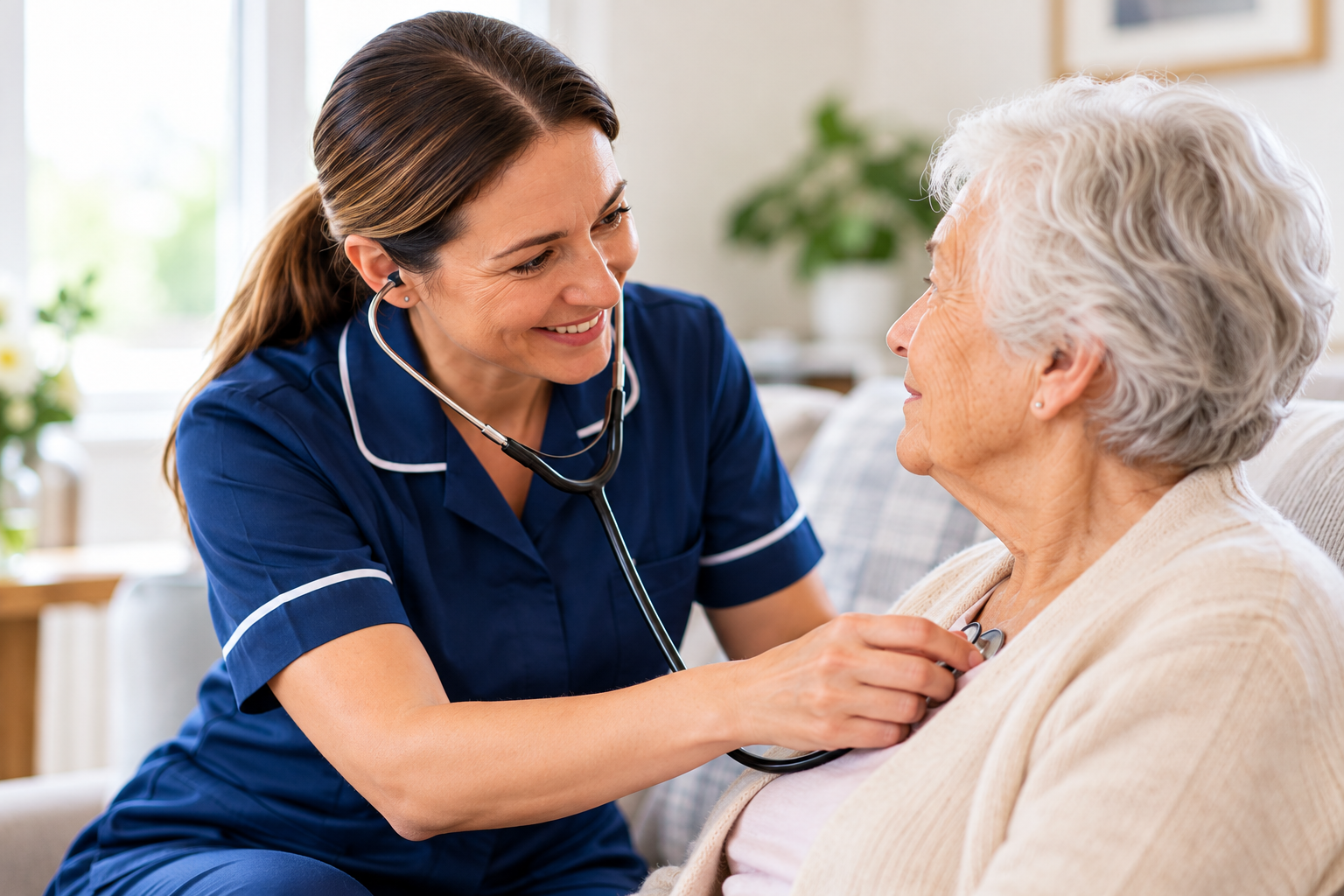
This practical two-day course is designed for nurses working in community services, Virtual Wards, Hospital at Home and home-visiting roles who want to develop confidence in physical examination and the early recognition of clinical deterioration.
With increasingly complex patients being cared for outside hospital, nurses need to be able to combine history taking, clinical observations and focused physical examination to recognise changes from a patient’s normal baseline and determine when further assessment or escalation is required.
What the Course Covers
The workshop focuses on practical examination skills relevant to community practice, including:
- ABCDE assessment and recognition of deterioration
- Clinical observations and NEWS2
- Respiratory examination and chest auscultation
- Cardiovascular examination, including pulse, blood pressure, perfusion and oedema
- Focused neurological assessment
- Abdominal examination
- Hydration and skin assessment
- Frailty, falls, mobility and functional assessment
- Identifying clinical red flags
- ENT and Eye Exam
- Clinical decision-making and escalation
- Documentation and SBAR communication
Practical & Case-Based Learning
This is a highly interactive workshop with opportunities to practise examination techniques and apply them to realistic community scenarios. Cases include the breathless patient, new confusion, falls and the deteriorating Virtual Ward patient, helping delegates answer three important questions: What do I need to examine? What do my findings mean? What should I do next?
Who Should Attend?
Suitable for registered nurses working in: Community Nursing • District Nursing • Virtual Wards • Urgent Community Response • Hospital at Home • Rapid Response • Intermediate Care • Frailty Services • Care Home Support • Home-Visiting Services
It may also benefit nurses developing towards advanced or extended clinical assessment roles.
Learning Outcomes
By the end of the workshop, delegates will be able to:
- Undertake a structured physical assessment of adults in community and home settings.
- Perform focused respiratory, cardiovascular, neurological and abdominal examinations.
- Integrate history, observations and examination findings to recognise deterioration.
- Identify clinical red flags and escalate concerns appropriately.
- Assess frailty, hydration, mobility, cognition and functional status.
- Clearly document and communicate clinical findings to the multidisciplinary team.
Delivery: Face-to-Face, In-House Training
Duration: 2 Days
Format: Practical skills, demonstrations, clinical cases and group discussion
CPD: Participatory CPD 12hrs





Social Network