
Data Security and Information Governance

- Description
- Curriculum
Mode: Online E-Learning Course
Duration: Approximately 60 minutes
Assessment: Knowledge check / MCQs
Certification: Certificate of completion issued after successful completion
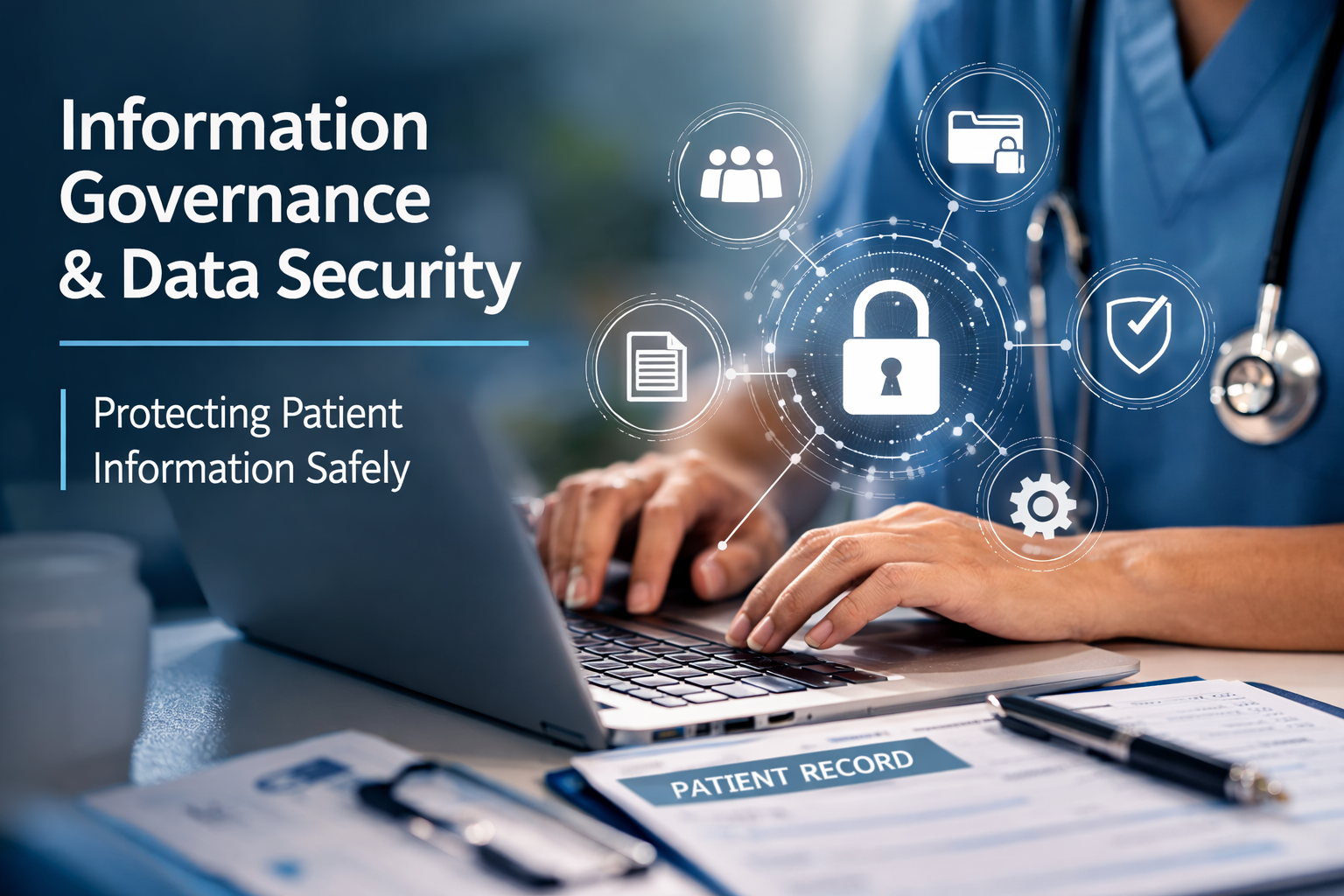
Protecting patient information is a fundamental responsibility for all healthcare professionals working within the UK health and social care system. Ensuring that confidential information is handled safely, securely, and lawfully is essential for maintaining patient trust, meeting regulatory requirements, and safeguarding healthcare organisations.
This e-learning course on Data Security and Information Governance provides healthcare professionals with a practical understanding of how to manage sensitive information safely in clinical and administrative settings. The programme explores key principles of confidentiality, data protection legislation, cyber security awareness, and safe information sharing within healthcare environments.
Participants will develop an understanding of the legal and professional responsibilities associated with handling patient information, including the requirements of the UK General Data Protection Regulation (UK GDPR), the Data Protection Act 2018, and NHS Data Security Standards.
The course also highlights common risks to information security such as phishing emails, inappropriate access to patient records, poor password management, and unsafe data sharing, and provides practical strategies to prevent breaches.
This programme is delivered as an online e-learning module, allowing healthcare professionals to complete the training flexibly at their own pace while meeting mandatory training requirements.
This course is suitable for:
• Doctors
• Nurses
• Allied Healthcare Professionals
• Healthcare Assistants
• Administrative and Reception Staff
• Managers working in healthcare organisations
Key Topics Covered
• Introduction to information governance
• Confidentiality and patient trust
• UK GDPR and the Data Protection Act 2018
• The Caldicott Principles
• Safe use of patient records
• Secure email and communication systems
• Cyber security and phishing awareness
• Password protection and device security
• Managing information safely in remote and digital environments
• Reporting data breaches and incident







Social Network