
Category

Instructor
Belmatt Healthcare Training
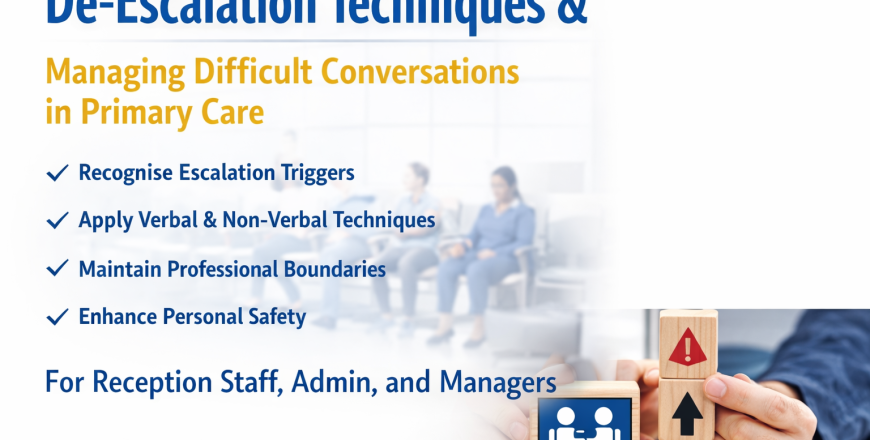
De-escalation Techniques and Managing Difficult Conversations
This session is delivered as a live, interactive webinar, allowing participants to engage in real-time learning with expert facilitators. The ...
Show more





- Description
- Curriculum
Managing difficult conversations is a core skill for all primary care staff. From reception to clinical roles, staff are often the first point of contact for patients who may be distressed, anxious, or frustrated. This workbook supports your learning from the session by encouraging reflection, application of de-escalation techniques, and alignment with UK best practice.
This training is grounded in real-life scenarios and supports safe, compassionate communication in line with guidance from the Care Quality Commission (CQC) and the National Institute for Health and Care Excellence.
Why This Matters in Primary Care
- Patients often present in emotional or vulnerable states
- Early escalation can lead to complaints, safety risks, or breakdown in care
- Staff confidence directly impacts patient experience and outcomes
- Effective communication supports safe, responsive, and person-centred care
Key Learning Points
- Recognising early signs of escalation (verbal and non-verbal cues)
- Using structured de-escalation techniques
- Communicating clearly under pressure
- Maintaining professional boundaries
- Understanding escalation pathways and personal safety
De-Escalation Techniques and Managing Difficult Conversations

Lecturer: Susan Strong

Social Network